
· Erin Delaney
Dog exercise in winter: short days, cold ground, and fetch after dark
What winter actually changes
Nothing about a dog's requirement drops in November; what drops is the number of hours in which it is convenient to meet it. Three things move, and only one is the temperature. The light goes first, and the route shrinks to the lit streets. The ground changes next, because pavements get treated. The third is the least discussed — your own tolerance: a long loop in horizontal rain gets shortened by the person holding the lead, every time.
How much your own dog needs depends on breed, age and build rather than on the season, and we went through it in the guide to how much exercise a dog needs.
The ground is the part people forget
This is the winter risk that has nothing to do with cold air. Pavements get treated with ice-melting products, and a dog walks through all of it barefoot, then licks his feet.
The ASPCA's cold-weather guidance is direct about it: winter walks can become dangerous when chemicals from ice-melting agents are licked off bare paws. Its practical instructions are specific — wash and dry your dog's feet and stomach after each walk to remove ice, salt and chemicals, check for cracks in the paw pads or redness between the toes, and remove the snow that packs into balls between the foot pads.
⚠️ Cracked pads, limping after a walk on treated ground, a dog who will not put a foot down, or one who keeps shivering once he is back in the warm: those are veterinary questions, not routine ones, and not ones to treat from an article.
The other winter hazard, and it is not the cold
Antifreeze appears in driveways and car parks at exactly this time of year. The ASPCA is unambiguous that it is lethal to dogs and cats, that spills from a vehicle should be cleaned up thoroughly, and that de-icing chemicals are dangerous if swallowed and belong out of reach. If you think your dog has swallowed any, that is a phone call to your vet or an animal poison control service straight away.
Exercising a dog in winter when it is dark before you get home
The dark does more than make the walk unpleasant. It shrinks where you are willing to let the dog range, and it should. The ASPCA's guidance says not to let a dog off lead on snow or ice, particularly during a snowstorm, because dogs can lose their scent in snow and become lost — and it makes the obvious companion point that a dog should always be wearing an ID tag.
Which leaves the dog still needing to run flat out, and nowhere familiar to do it.
Dog exercise in winter: short and sharp does more than long and cold
Fortunately the thing to cut is the part that was doing least. Walking is low-intensity endurance work, and lengthening it produces a fitter dog asking for more, not a calmer one — we set out why in the guide to indoor exercise.
In winter that argument stops being theoretical, because the long walk is the first thing the weather takes away. Twenty sprints and a turn cost a dog far more than a slow mile in the rain. The winter session is short, explosive and repeated — the one shape of exercise that needs neither daylight nor a dry pavement.
Where the launcher fits in a week of winter dog exercise
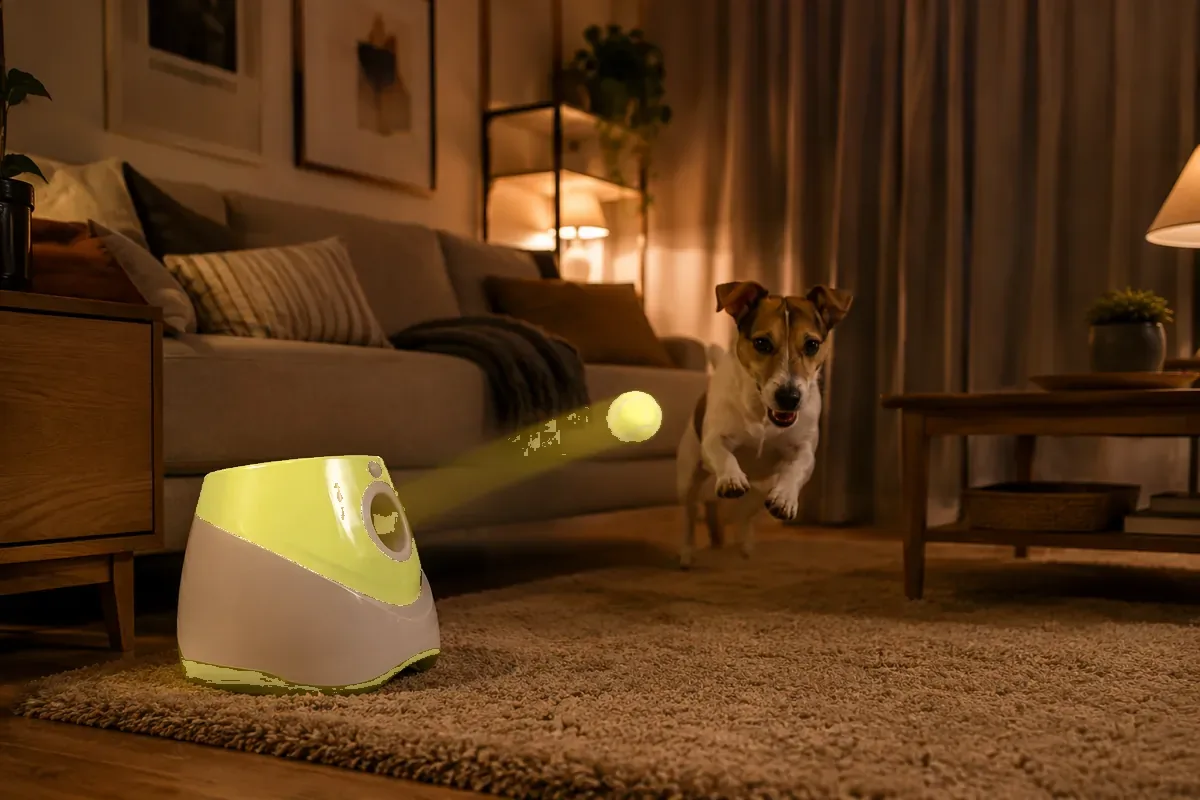
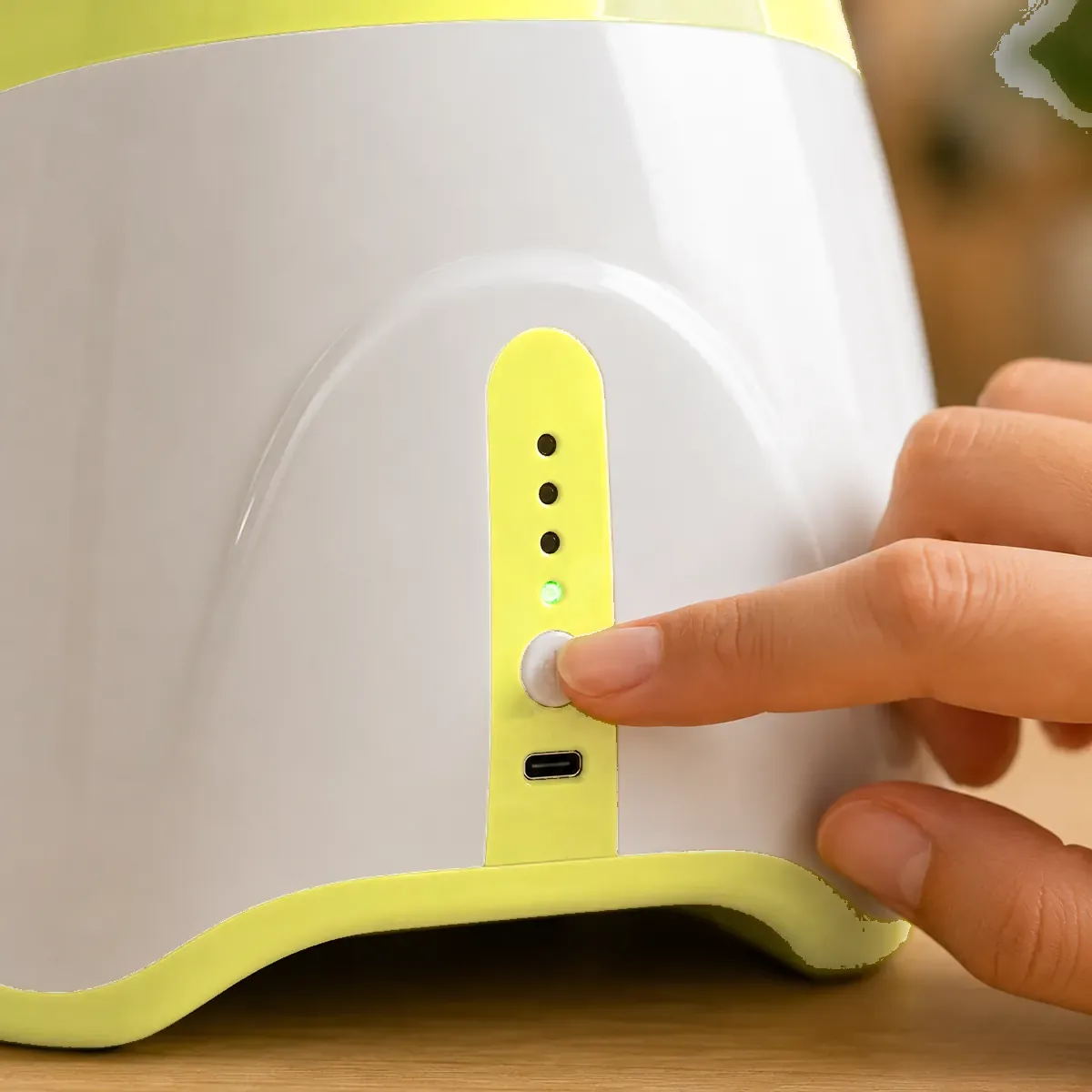
An automatic ball launcher is built for the session winter forces you into. Your dog drops the ball into the chute and the machine sends it back at one of three settings — roughly 10, 20 or 30 feet. The first runs down a hallway, for the evenings it is dark at five; the longest is there for the dry hour that turns up on a Saturday.
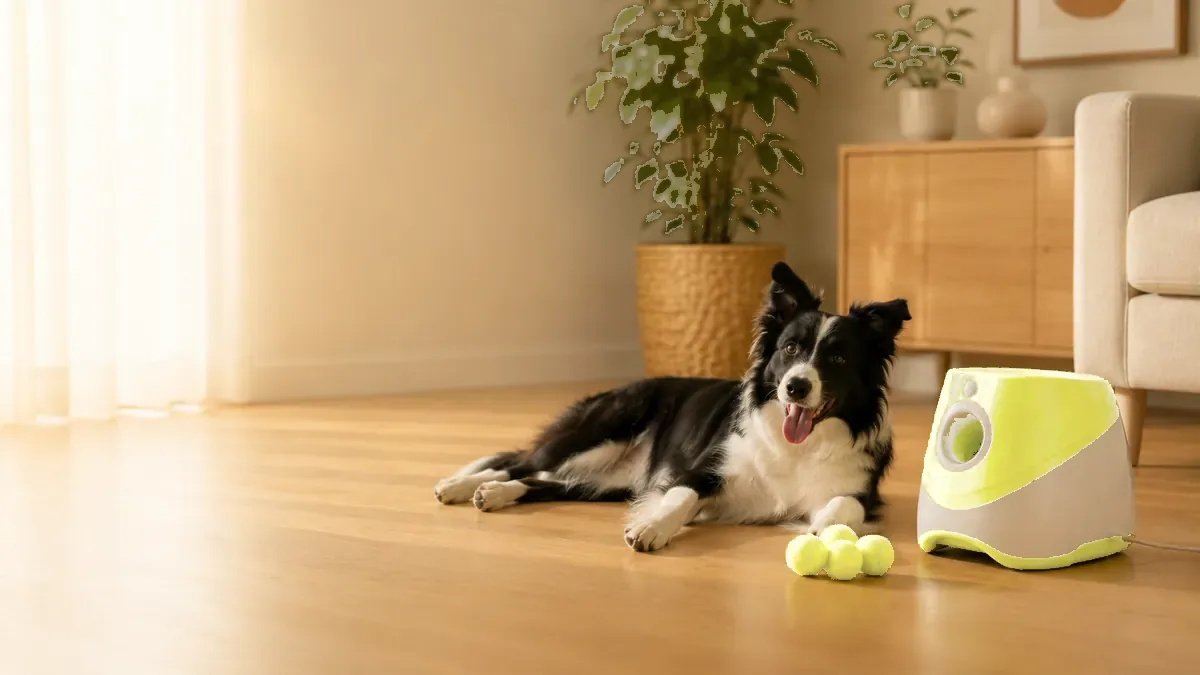
Two details earn their place here. It charges over USB-C and runs on its own battery, so it lives in the room you actually use rather than by a socket in the garage. And three 2-inch balls come in the box: a ball that disappears into snow or under a radiator does not end the session. That ball size is deliberate, and it is the thing that matters most about a ball for a small or medium mouth.
One thing has to be in place first: the loop only runs once the dog reliably lets go of the ball, and the week to teach that is before the clocks change — the method is here. It covers the running. Sniffing and other dogs to meet still happen outdoors, and the short winter walk is where they go.
The ten minutes after you come back in
Towel the dog dry as soon as he is inside, clear the packed snow from between his pads, and give the feet the check above. The ASPCA also notes something easily missed: pets burn extra energy simply keeping warm in winter, and plenty of drinking water matters as much in the cold as in the heat.
A dog who has sprinted settles on his own; one walked slowly round a wet block often does not. If yours is the second, the head is the part that has not been worked — six exercises are here.
When it is a vet question and not a weather question
Some dogs meet winter differently, and an article cannot tell you whether yours is one. Puppies, older dogs, thin-coated dogs and any dog with a joint, heart or breathing condition belong in a conversation with a vet before the cold months rather than during them — as does a dog whose appetite for activity changes suddenly, in either direction, once the temperature drops. That conversation settles what the rest of this guide cannot.

Erin Delaney · Dog trainer, specializing in working off energy
Erin has spent twelve years working with companion dogs in cities, mostly active breeds living in apartments. She writes the Pupserve guides and reads every product page before it goes live.
Published 4 September 2026. Cold-weather guidance quoted here is the ASPCA's. See how we test.